
The Mistake Almost Everyone Makes First
The power goes out, the door won't budge, and there's a storm rolling in. You spot the red cord hanging from the opener track and pull it — because it's right there, it looks like the obvious fix, and it feels like taking control of the situation. Most people do this without stopping to check one thing first: where the door actually is, and what's holding it up at that exact moment.
That instinct is understandable. The cord is marketed as the "manual override," so it feels like a universal reset button. It isn't. It only disconnects the door from the opener's carriage — it does nothing to manage the weight of the door itself. That part is still entirely up to gravity, your springs, and whatever is holding the door open at the moment you pull it.
What the Cord Is Actually For
The emergency release cord exists for exactly one job: letting you move the door by hand when the opener can't or shouldn't be doing the work. That covers a few real situations —
- A power outage during hurricane season when you need to get a vehicle out before conditions worsen
- An opener motor that's failed or is making grinding noises you don't trust
- A car accidentally trapped in the garage with the opener unresponsive
In all of these, the cord lets the door swing free of the motor so you can lift or lower it manually, the way doors worked before openers existed.
Where It Goes Wrong — and How Badly
The danger shows up when the cord is pulled while the door is anywhere other than fully closed and resting on the floor. A garage door isn't lightweight — most residential doors run well over a hundred pounds — and when it's open or partway up, that weight is being held by the torsion or extension springs, not the opener. Pull the release cord at that moment and the door is suddenly unsupported by the motor. If the springs are strong and balanced, the door may stay roughly in place. If a spring is weak, rusted, or already cracked, the door can drop suddenly — fast enough to injure anyone underneath, crush whatever's in its path, or slam hard enough to bend panels and tracks.
This risk is higher than it sounds in homes around Florahome and Putnam County. The humidity here is hard on spring coils, and homes near the water in places like Crescent City or Palatka deal with salt air on top of that. Rust doesn't always announce itself — a spring can look fine and still be weaker than it was a year ago. Pulling the cord assumes the spring will behave the way it did when the door was new, and in a humid climate, that assumption gets shakier every season.
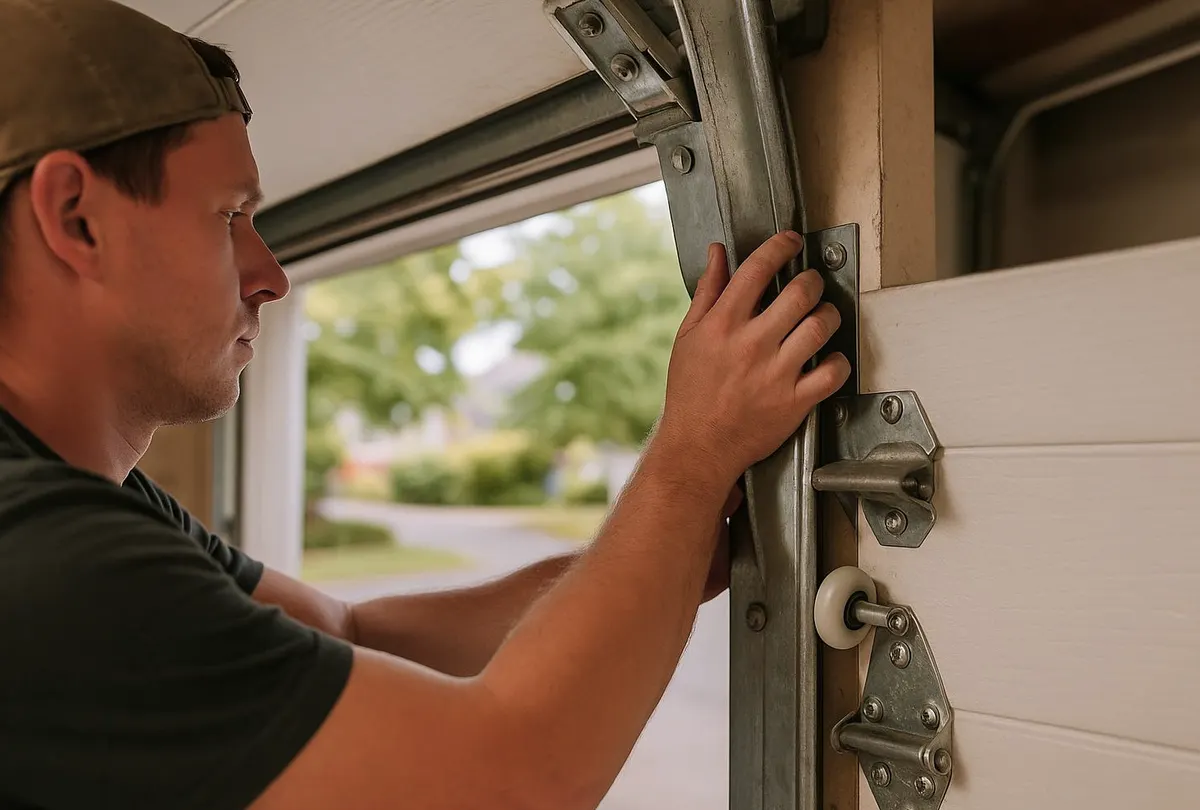
There's a second, quieter failure mode too: tracks that have swollen or shifted slightly from moisture can bind a door even when it's disconnected from the opener. If you pull the cord expecting a smooth manual lift and the door instead sticks halfway, fights you, or drops unevenly on one side, that's usually a sign of a track or roller problem, not something to force past.
How to Use It the Right Way
- Close the door first, if you possibly can. The safest time to pull the release cord is when the door is already down and resting on the floor — there's no weight to manage.
- If the door is open and you must disconnect it, don't do it alone. Have someone support the door or be ready to brace it the instant it's released.
- Never pull the cord as a shortcut for a slow or sticky opener. That's a symptom of a tune-up issue, not a release-cord issue.
- After an outage ends, reconnect the trolley carefully and test the door before relying on the opener again. Run it up and down once manually to feel for grinding, uneven movement, or resistance.
- Don't leave the door disconnected overnight during storm season — a door that isn't locked to the opener's carriage can be easier to force open, and it also won't hold against wind load the way a properly engaged, wind-rated system should.
When to Call Florahome Garage Door Pro
If pulling the release cord ever results in a door that drops hard, hangs crooked, or won't move smoothly even by hand, stop and call us before touching it again — that's almost always a spring or cable problem, not something to diagnose by trial and error. Our Garage Door Spring Repair service replaces worn or rusted springs with correctly sized, properly tensioned ones built for Florida humidity, and our Garage Door Tune-Up & Maintenance visits catch weak springs and swollen tracks before they turn into an emergency-cord situation in the first place.
If you're in Florahome, Palatka, Interlachen, or anywhere else in Putnam County and you're not sure your springs would hold up if you ever needed that cord, give Florahome Garage Door Pro a call. We'll check it properly, fix what needs fixing, and make sure your door does what it's supposed to do when you actually need it to.